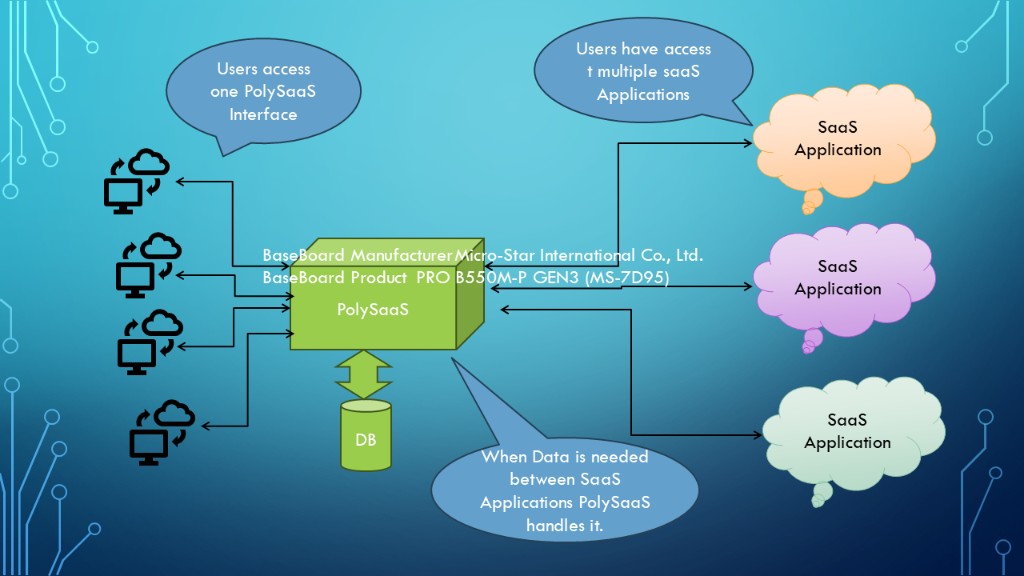
PolySaaS Architecture

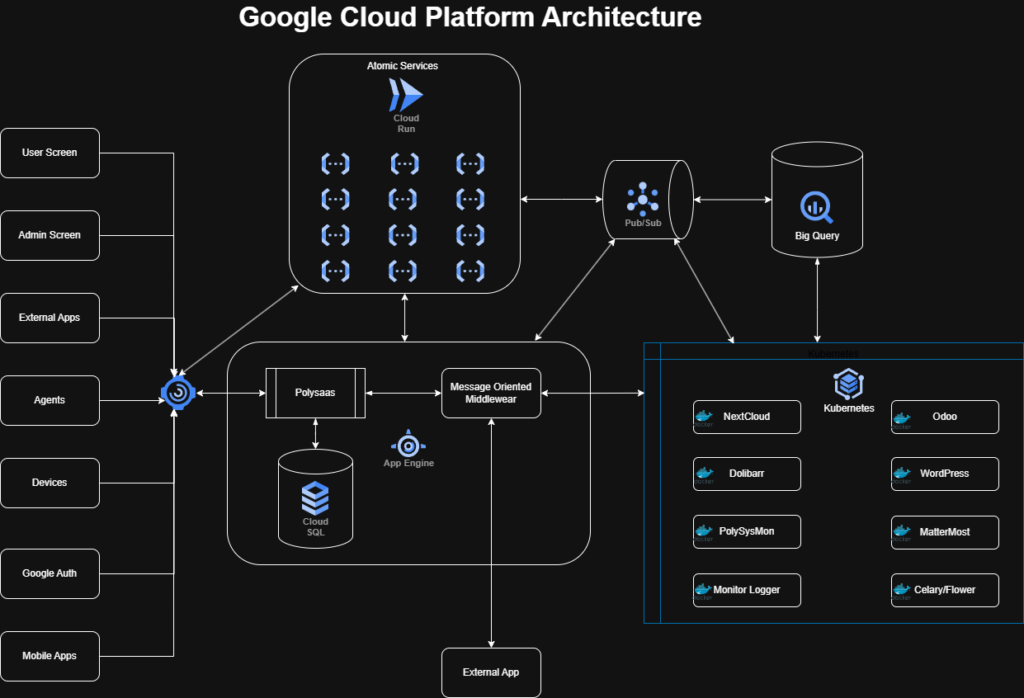
PolySaaS Architecture — Built on Google Cloud Platform

At the core of PolySaaS is a clean, modern, cloud-native architecture designed for scale, flexibility, and zero vendor lock-in. The diagram above illustrates how we deliver this vision using Google Cloud Platform as the foundation.

We use a service-oriented, microservices-based approach powered by message-oriented middleware to ensure every component is loosely coupled and independently scalable. This separation of concerns allows us to innovate rapidly while maintaining rock-solid reliability.

Data drives everything. Behavior changes through configuration and data updates — not code redeploys — enabling low-code or no-code customization for teams of any size.

Multi-tenancy is baked in from the ground up, so every customer gets isolation, performance, and security without compromise.

Atomic Services are the heart of the platform — they handle everything from simple data integration and manipulation to complex computations, AI agent queries, and any other processing your workflows require. This lets us connect apps, transform data, run business logic, and orchestrate AI tasks without writing custom code for each use case.

Google Cloud Platform provides the backbone:

BigQuery for analytics and operational insights
Kubernetes Engine for container orchestration
Pub/Sub for reliable, asynchronous messaging
Cloud SQL and Cloud Run for managed databases and serverless workloads
Cloud Storage for durable, scalable file handling
The result? A platform that grows with your business, integrates effortlessly with external applications, and lets AI peers collaborate in real time — all on the world’s most advanced cloud infrastructure.

Ready to see it in action? 

Sign Up

What is Dynamic Orchestration

Dynamic Orchestration is a system that provides atomic services for distributed microservices, enables orchestration driven by events, treats applications and AI as equals, offers automatic scalability and repair, and ensures safe, encrypted information transfers.

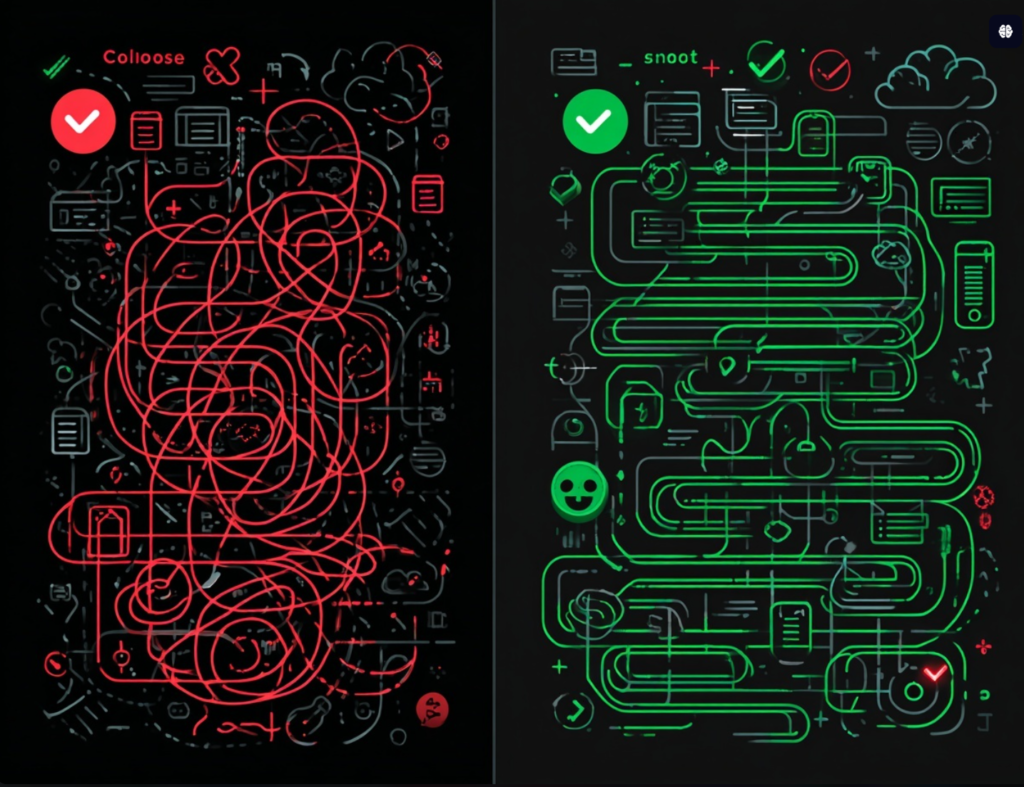
The two-column diagram below compares traditional SaaS integration with PolySaaS Dynamic Orchestration.

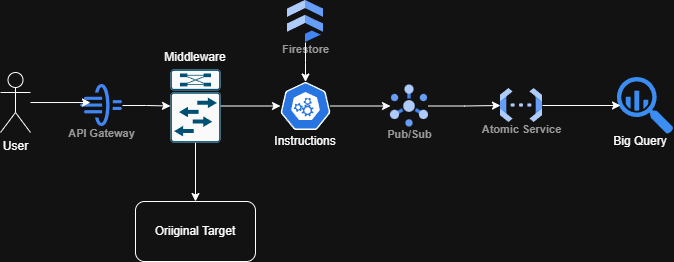
A simplified view of real-time orchestration in PolySaaS

Dynamic Orchestration (simple example)

When a user submits a post, the middleware finds matching instructions and publishes the post data asynchronously to Pub/Sub. This keeps the original post flowing without delay. The Atomic Service referenced in the instruction then picks up the Pub/Sub message, adapts and extracts the relevant data from the original post, and posts it to BigQuery for secure, scalable analysis. All in the background, no interruption to the user.

Why it matters?

Spaghetti code on left, PolySaaS Architecture on the right

Left side (under chaotic red spaghetti code / silos / manual mess): Legacy chaos kills momentum. Disconnected silos. Manual integrations. Endless custom code. High costs pile up, deployment crawls, innovation stalls, and teams burn out chasing brittle point-to-point connections. Every new tool adds friction, every change risks breakage, and scaling becomes a nightmare.

Right side (under glowing clean neon flow / Pub/Sub / Google Cloud / AI peers): PolySaaS changes everything. One low-code platform. Real-time event streaming via Google Cloud Pub/Sub. AI-assisted peers accelerate configuration. Tenant-isolated, reusable plugins, and billions-of-events scale without rewriting everything. Result: 40–60% efficiency gains, minutes-not-months integrations, predictable costs, and infrastructure that grows with you—not against you.

How it works

Every time a user does something like click on a link or fill out a form, the PolySaaS middleware can pick it up and then one or more Atomic Services can process it before sending it on its way to the proper Application. Atomic Services have the ability to transfer certain request data to other applications, including customer record sync, address update, or billing information. You don’t have to worry about anything other than the data coming in and going out of these tiny, easy-to-develop Atoic Services.

Stop Managing Tools. Start Orchestrating Them.

PolySaaS gives your team one platform, one subscription, and AI teammates that actually collaborate — not just respond. Built on Google Cloud, powered by Atomic Services.

Get Early Access – No Risk
Join hundreds already on the list. First access + exclusive updates.

Examples

We’ve already talked about how important it is to keep customer info in sync. It only takes one change to make them all new. But from the point of view of process improvement, you may have reports of more mistakes happening in a certain process. Six Sigma can be used to gather data from the process and store it in Big Query so that it can be analyzed and used to find places where things could be better. You can change the process on the fly by replacing the Offending Atomic Service or just adding steps before and after the service that did the wrong thing.If you add an Atomic Service at a certain point in the process, you can do this without any system downtime. You can also limit testing to a certain situation without any system downtime.